Ser / 04
MMXXVI
Monitors that refuse the room.
Resonar builds reference monitors for people who treat the room as part of the instrument.
Analogue signal path
No correction crutches
Driver
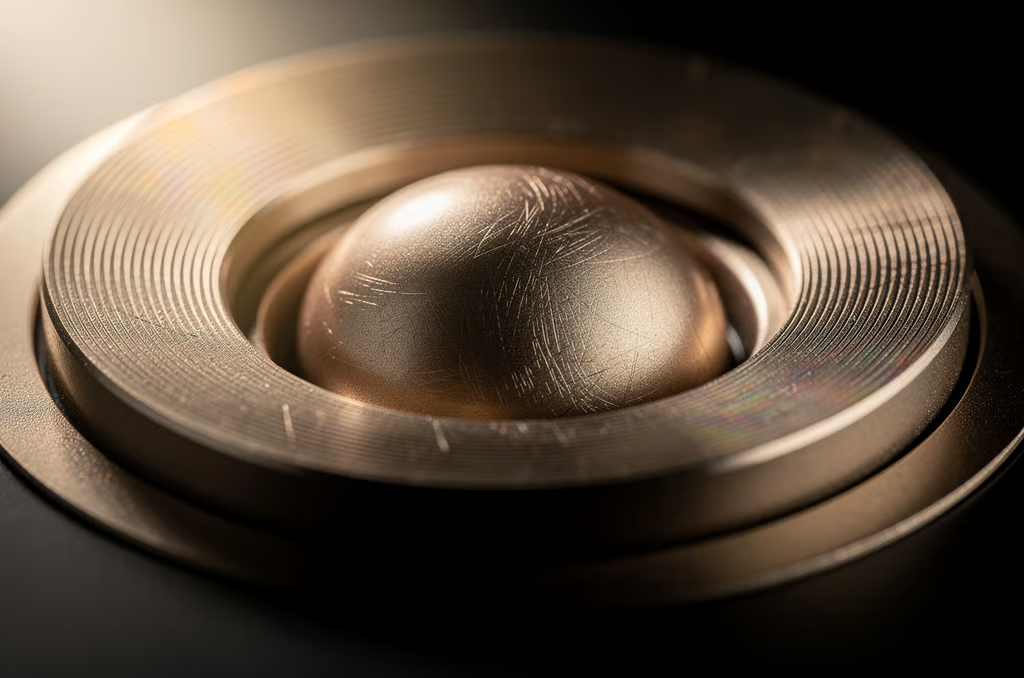
Beryllium dome
Cabinet
Cast, not folded
Crossover
Tuned by ear
Service
Rebuildable, not sealed
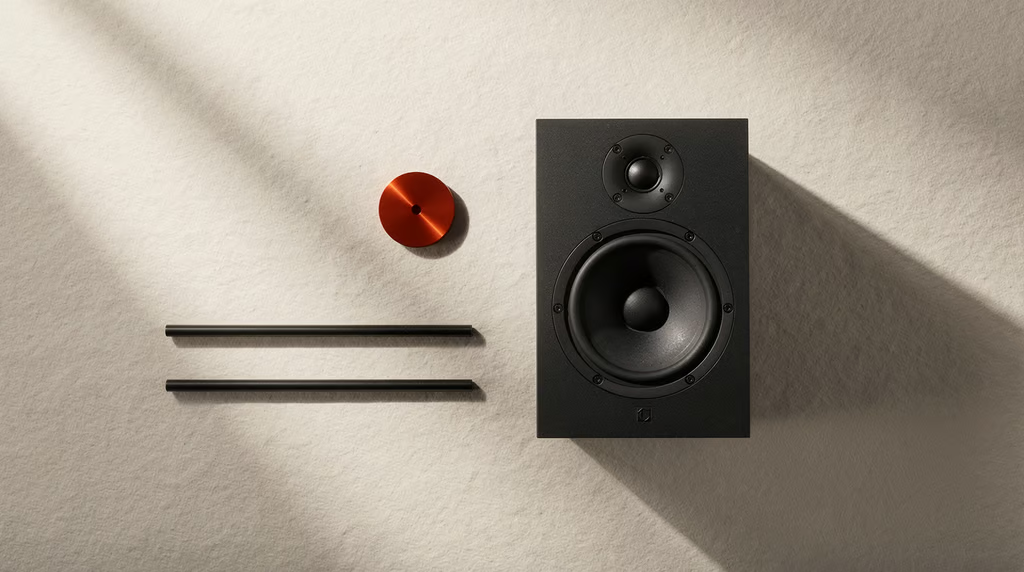
Reference Series 04 — the pair, in a working room
Cast cabinet / passive crossover
01
Cabinet & Driver Array
Cast enclosure, 24-element array
One immovable cabinet. Ten thousand tuned decisions.
Let the enclosure carry all the weight so the drivers never have to fight it. Mass where you want silence, precision everywhere the signal travels.
Hear it in person
The driver array
24 elements / 3 active
Identical elements, individually tuned. Move one and the array still holds its phase.
Scale the cabinet, not the crossover. The array absorbs it without a redesign.
02
Crossover & Phase Alignment
Seven bands, one arrival
Every band arrives together, or it isn’t music.
Seven crossover regions, phase-aligned to a single arrival. What leaves the amplifier as separate work reaches your ear as one event.
Red segment = the crossover handoff
A
B
C
D
E
F
G
03
Damping & Resonance Control
Silence, engineered as a part
The loudest thing a monitor does is nothing at all.
A noise floor you cannot hear is the hardest thing to build. Resonar treats silence as a component, so the space between notes carries as much intent as the notes.
Listen to the gaps first
Impulse
Controlled decay, no ring
Floor
4
Measured Ledger
Anechoic, 24°C, one metre
Measured, never claimed.
Every figure below comes off the bench, not the brochure. Same room, same microphone position, same cabinet — recorded once and printed as measured.
18 Hz
Low limit
−3 dB in a sealed 42-litre cabinet
112 dB
Maximum output
Continuous, one metre on axis
±0.5 dB
Register deviation
Held across all five bands
40 hrs
Per cabinet
Hand assembly and final voicing
05
Assembly & Hand Finishing
Hand-wired, measured twice
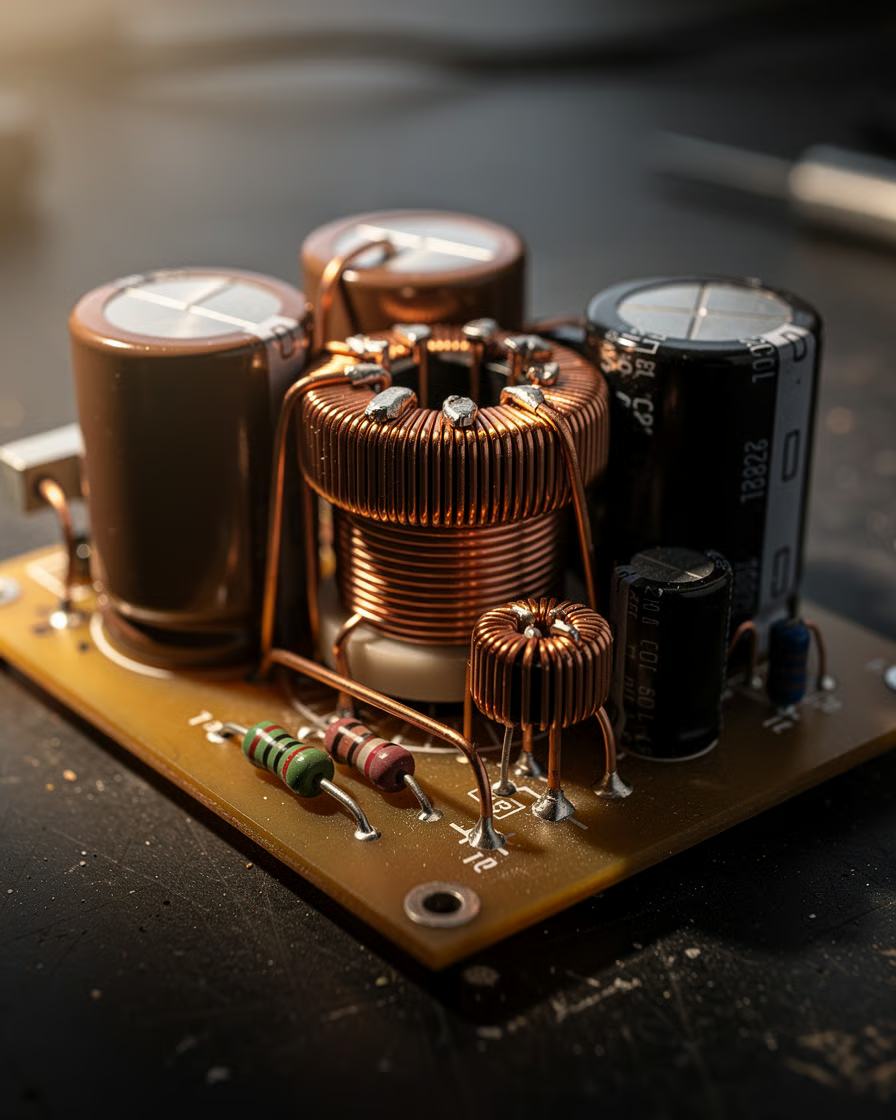
Crossover — point to point, no board
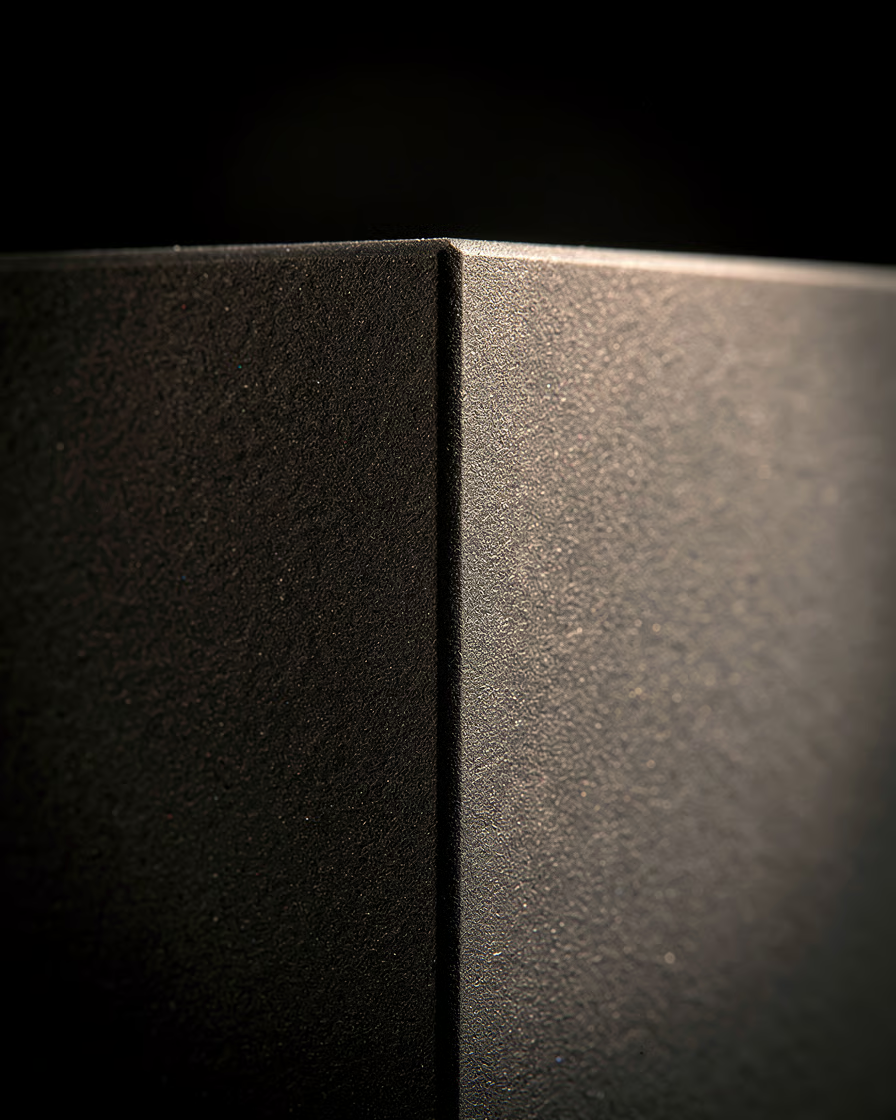
Corner — cast in one piece
The parts you never see decide what you hear.
A crossover is wired by hand and measured twice, because a solder joint has a sound. A corner is cast rather than folded, because a seam has a sound too. Neither is visible once the grille goes on — which is exactly why they get the most attention.
Every unit signed by the engineer who tuned it
06
Cabinet Volume & Range
Four to thirty-one litres
A litre of cabinet is a rounding error until the bass earns it.
Every enclosure in the range is sized against the driver it carries, so six cabinets read as one family instead of six boxes wearing the same badge.
4
7
11
16
24
The widest panel is the low end.
Give the longest wavelength the most room and the cabinet stops arguing with it.
31
07
Output & Headroom
Reference level, no compression
Take it to reference. Nothing blurs.
Six cabinets, one voice, no room correction hiding the seams. Bring the room you actually work in and hear what stays true under pressure.
Book a listening room
Talk to an engineer
Whisper
Working level
Reference